How a roll-off rental works
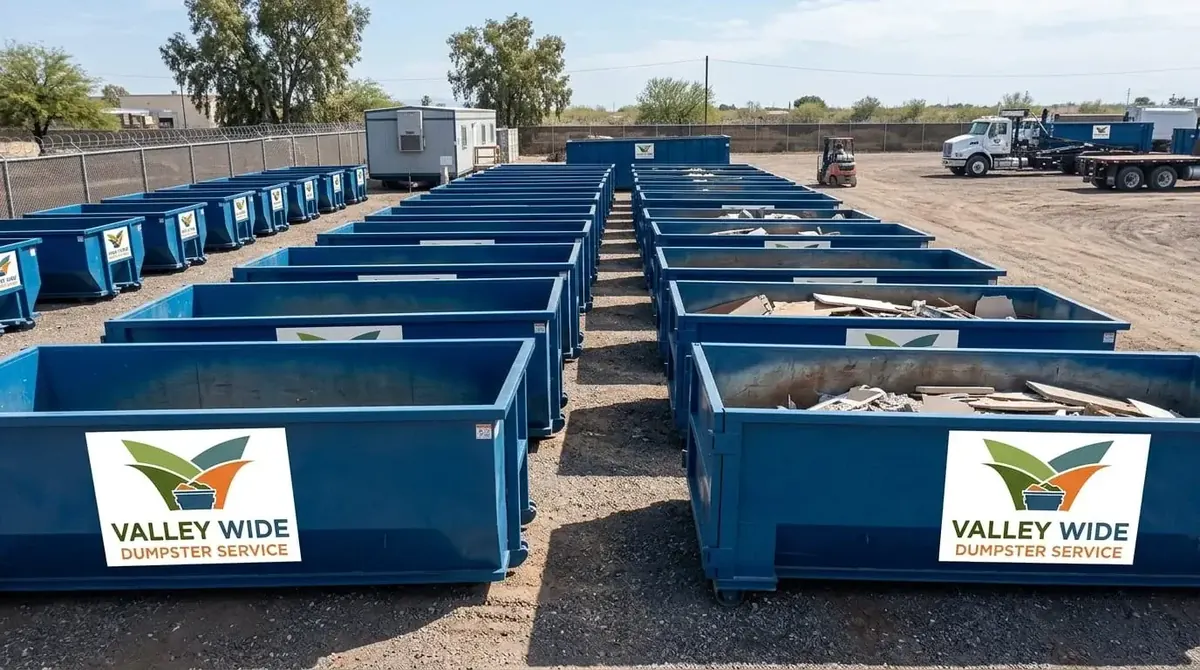
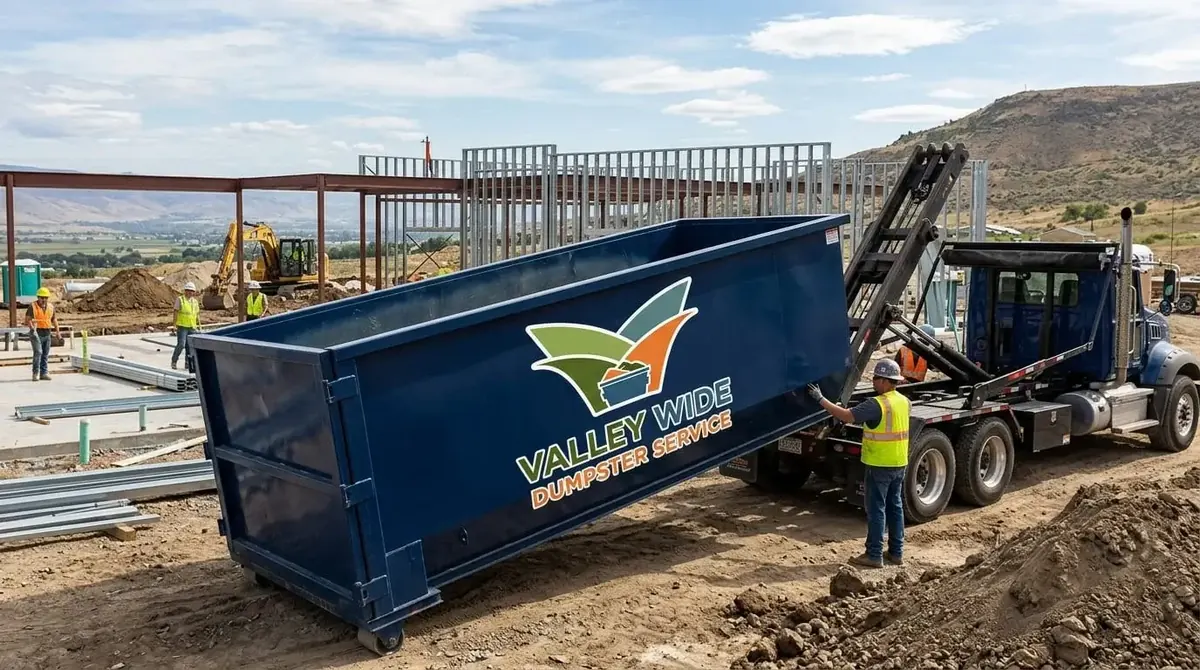
You call, describe the job and the address, and get a flat price that covers delivery, pickup and disposal up to a stated weight allowance for a standard 7-day rental. The truck drops an open-top container on your driveway, lot or job site; you load it level with the top edge; you call when it is full or the job is done, and we schedule pickup. You do not need to be home for either, as long as the spot is clear and we have placement instructions. Same-day delivery is often available across Phoenix when you call before noon; otherwise it is usually next day. The yard is at 1575 E Jackson St, about a mile and a half east of downtown, so the central city and Tempe are a short run and the far corners of the Valley — Buckeye and Queen Creek — are roughly 37 to 38 road miles.
Choosing a size
Start with the job, then check the weight. A 10 yard, about 14 feet long, suits small remodels and heavy material — concrete, tile, dirt, roofing. A 15, about 16 feet, suits garage cleanouts, flooring and yard debris. The 20, 30 and 40 share a 22-foot footprint and get taller: the 20 for kitchen and bath renovations and whole-home cleanouts, the 30 for whole-home renovations and estate cleanouts, the 40 for demolition and construction. Included weight runs from about 1–2 tons on a 10 to 5–6 tons on a 40. The sizing guide has the full table.
What the City of Phoenix collects, and what it does not
Phoenix collects household trash weekly from a 90-gallon black cart, with recycling on the same day. The carts will not take construction materials, concrete or household hazardous waste, and City Code 27-14 bars construction and demolition waste from City trash, green organics and recycling containers altogether — the person responsible has to remove it promptly. Bulk trash is now by appointment only, four times a year, up to 10 cubic yards in a single pile, and it refuses bricks, concrete, dirt, rock, asphalt, roofing shingles and tiles, construction material over 25 pounds or 4 feet long, tires, glass and refrigerant appliances.
Residents paying full refuse fees can take one load of up to a ton to the 27th Avenue or North Gateway transfer station free once a calendar month, with a city services bill and matching photo ID; above that it is $55 a ton. The City also rents its own roll-offs to residents with an active account — $165 a pull plus $55 a ton, up to 10 days. A private roll-off is the option for a job that will not wait for an appointment, will not fit in a pickup bed, or needs a box you can fill over a week.
Placement and permits in Phoenix
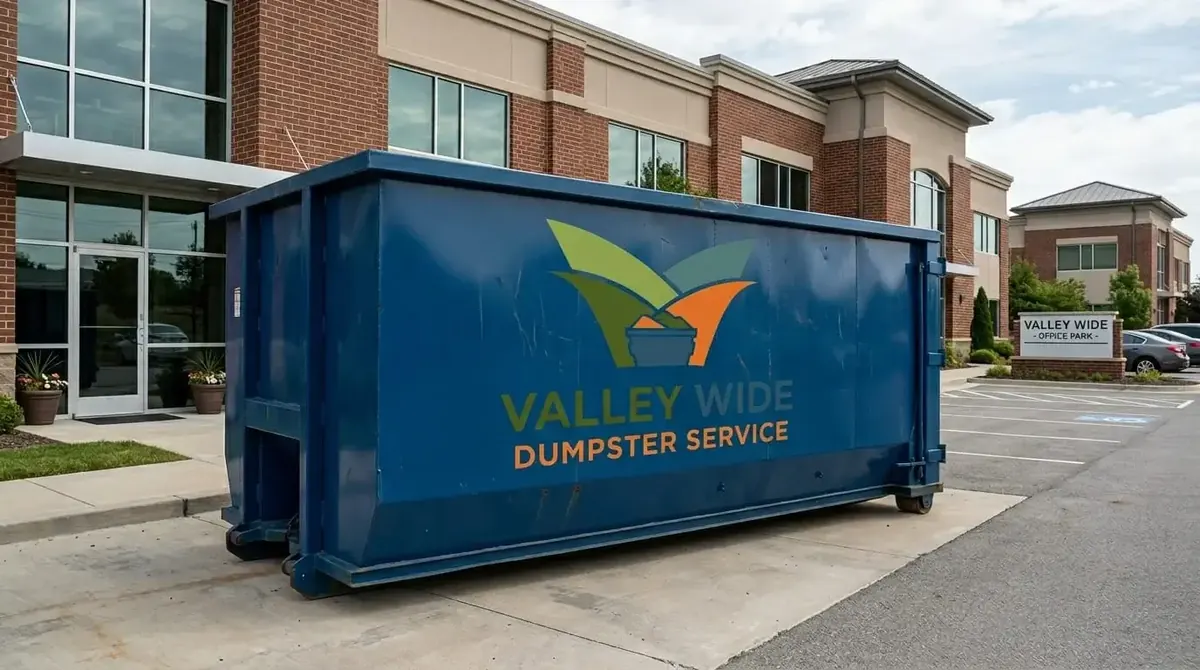
On your own driveway or lot we found no City permit requirement. The container has to show its supplier's name and phone number, legible from ten feet (27-14 C.4), and sit where it does not block pedestrians or vehicles. Keep it more than 15 feet from your carts on collection day — 27-13 bars any obstruction, parked vehicles included, within that distance. In a street, lane or sidewalk, the permit is a TRACS restriction permit from Street Transportation's Right-of-Way Management Office, (602) 262-6235: allow two business days for a partial or sidewalk restriction and three for a full one, and keep a 36-inch accessible path open. The temporary use permit itself has no application fee. The permit guide covers the other 16 cities.
Who may haul, and the demolition paperwork
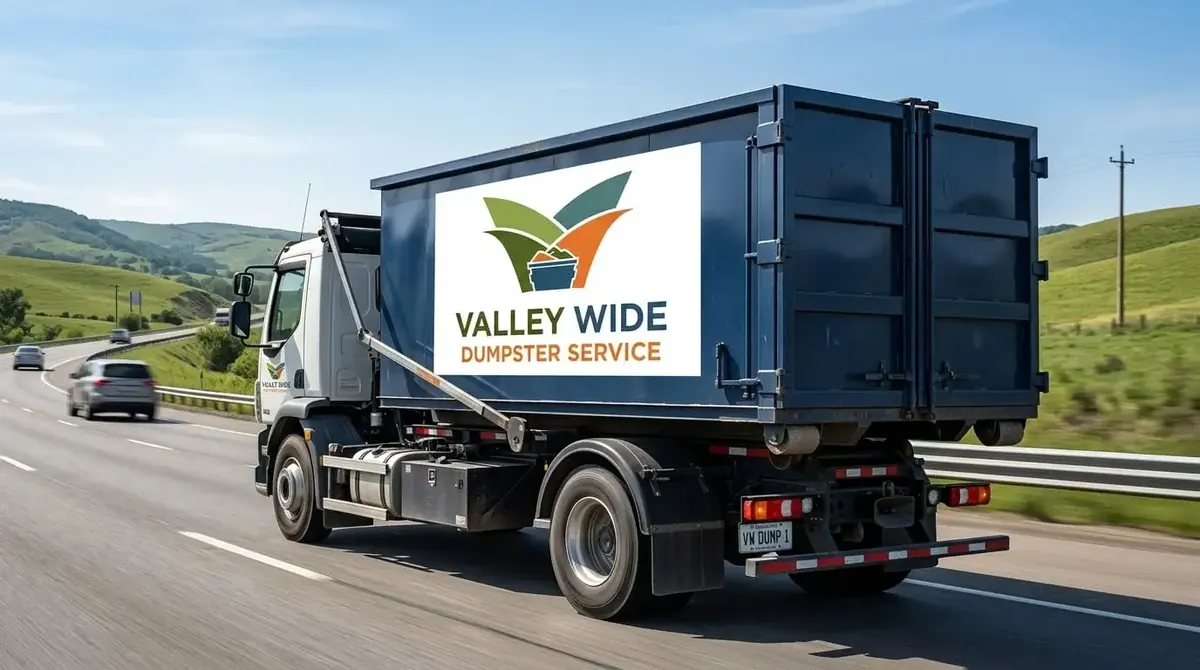
We found no state licence for ordinary roll-off haulers in Arizona; the permit that matters is Maricopa County's Non-Hazardous Solid Waste Hauler permit, $120 per vehicle per year, with the number painted on the doors and rear. Phoenix adds no hauler licence or franchise. Beyond the city line the rules are set city by city — Tempe, Mesa, Chandler, Gilbert, Scottsdale, Paradise Valley, Glendale and Buckeye license haulers — and every city page says what applies there.
Demolition adds paperwork. Phoenix requires a permit for total, partial or interior demolition — $98 for a single-family structure, $390 plus $6 per 1,000 square feet for anything else — and it expires if the job, including clearing all debris, is not finished within 60 days, so a roll-off on day one keeps the clock honest. The City sends you to the Maricopa County asbestos program (602-506-6708) before you apply: a regulated building needs an AHERA inspector's survey and a 10-working-day notice with a $600 fee, while a single owner-occupied parcel of four or fewer detached homes is exempt. Homes on the Phoenix Historic Property Register — Roosevelt, Willo, Encanto-Palmcroft, Coronado and the rest of the 37 residential historic districts — go through the Historic Preservation Office as well.
What goes in and what stays out
In: household junk, furniture, wood, drywall, flooring, roofing shingles, yard debris, branches and tree trimmings, and concrete, dirt or tile in a small box of their own. Out, by Arizona law: tires (A.R.S. 44-1304), lead-acid batteries (44-1322) and used oil (49-803). Out, by federal landfill rules: free liquids, and fridges, freezers and A/C units unless the refrigerant has been recovered. Out everywhere: paint and solvents, chemicals, propane tanks and gas cylinders, medical waste and asbestos. The full guide says where each banned item goes instead.
Loading, pickup and booking
Load level with the top edge — the County dust rule wants hauled loads tarped with three inches of freeboard, so an over-full box cannot move. Spread heavy material across the floor rather than at one end, and in summer do the loading in the cooler hours. Keep the path clear for pickup. Call before the pickup date if you need more time, and before the load goes over the weight line if you think it might — a planned second haul is cheaper than a surprise at the scale.
To book, call (602) 806-8650, 24 hours a day, 7 days a week. Have the address, the material and a rough quantity ready. You will have a flat price and a delivery window before you hang up.