Quick answer by project type
For most home projects in Phoenix and across the Valley, a 20 yard dumpster is the one to start with. It handles kitchen and bathroom renovations, whole-home cleanouts, roofing and landscaping cleanup, and it is one of the sizes we rent most. Go 10 yard for a small remodel, a garage cleanout or anything heavy — concrete, tile, dirt or a roof tear-off. Go 15 yard for a garage or attic cleanout, carpet and flooring, or a small deck or fence. Go 30 yard for a whole-home renovation, an estate cleanout or an office or retail remodel, and 40 yard for demolition, large construction and warehouse cleanouts. Not sure? Call (602) 806-8650 and we size it for you.
The five sizes side by side
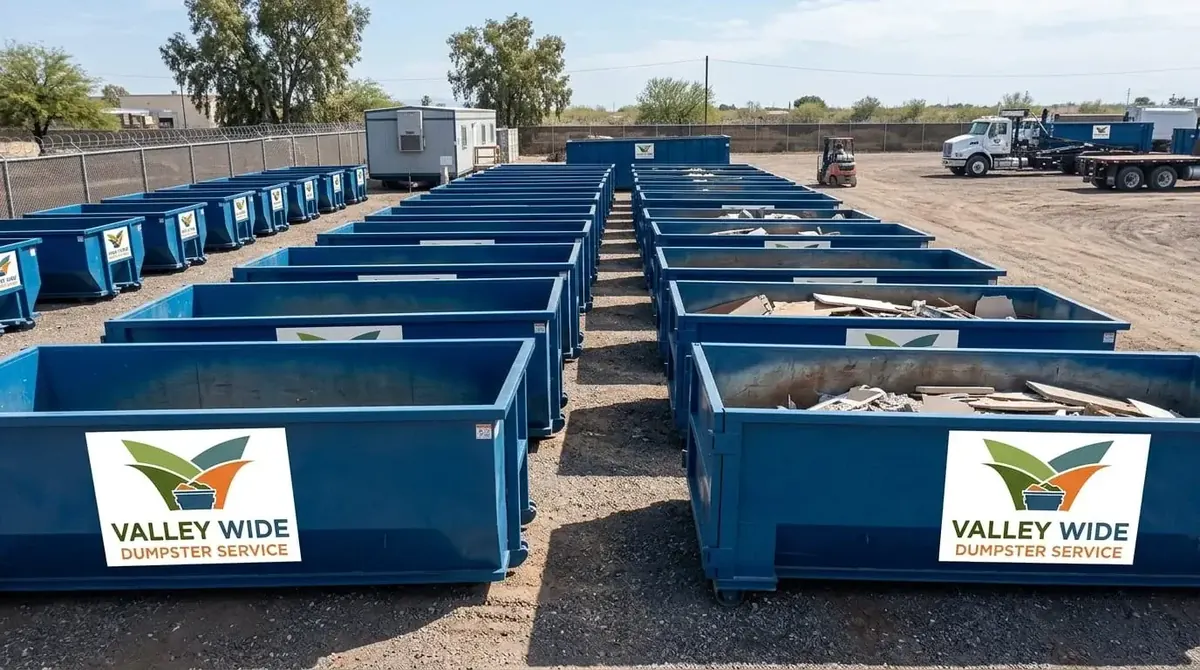
All five are open-top roll-offs about 7.5 feet wide. The 10 and 15 are shorter boxes; the 20, 30 and 40 share a 22-foot footprint and simply get taller. Trash bags are a rough guide to volume. The weight column is what the flat rate includes.
Most people under-count the pile. When your estimate lands between two sizes, go up.
Check the weight, not just the volume
Volume and weight are two separate limits, and dense material hits the weight line long before the box looks full. In the Valley the usual heavy hitters are concrete, block, brick, dirt, rock, tile and roofing — what comes out of a patio, a block wall, a backyard regrade or a re-roof. Those go in a 10 or a 15 loaded level, not a 20 heaped high, because a heavy 20 is past what the truck can lift safely and past the tonnage the price includes.
Why weight drives the price: disposal is charged by the ton. The City of Phoenix's two public transfer stations, 27th Avenue and North Gateway, charge $55 a ton. The Glendale Municipal Landfill charges $55.58 a ton in 2026, and $155.58 a ton for hard-to-handle items 4 feet long or 2 feet across, such as stumps, trees and concrete. Every flat quote includes a stated weight allowance; go over it and the overage follows what the disposal site charges. Load heavy material level and spread it across the floor and you stay inside it.
There is a legal limit on height too. Maricopa County's dust rule (Rule 310) wants hauled loads covered by a tarp with at least three inches of freeboard, and nothing loaded above the sides. An over-full container cannot legally or safely be transported, so it waits until the top comes off.
Measure the drop spot
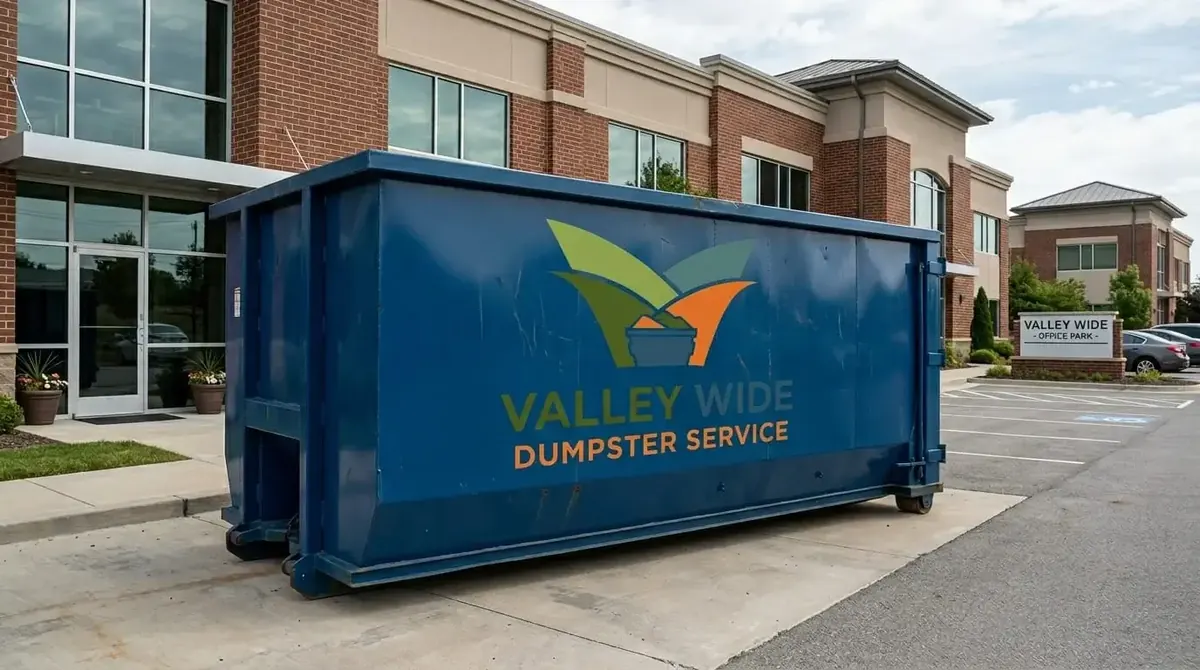
Allow roughly 20 to 22 feet of length for the box, room for the truck to line up, and clear space overhead for the lift — watch for low branches, palm fronds over the drive and overhead lines. Put plywood or boards under the contact points if you want extra protection for pavers or a new driveway. On trash day, keep the container more than 15 feet from where your carts go out: Phoenix City Code 27-13 bars any obstruction, parked vehicles included, within 15 feet of a container set out for collection.
Out in Cave Creek, many homes sit on private dirt roads, and the Town's own Code of the West warns that many large construction vehicles cannot navigate small, narrow and primitive roads. Tell us about the road and the drive when you call; sometimes the smaller box is the one that fits.
If the container cannot go on your property, the street is a permit question, and every city handles it differently — Phoenix through a Street Transportation right-of-way permit, Scottsdale through a Permit to Work in the Right-of-Way that names roll-off dumpsters outright, Chandler through a $315 traffic control permit. The city-by-city permit guide covers all 17 cities we serve.
Why the bulk trash day will not do it
People sometimes try to feed a remodel through the city bulk pickup. It rarely works. Phoenix bulk trash is now by appointment only, four times a year, with a 10-cubic-yard cap, and it refuses bricks, concrete, dirt, rock, asphalt, roofing shingles and tiles, construction material over 25 pounds or 4 feet long, glass, tires and fridges. Scottsdale's monthly pile is capped at 10 by 6 by 4 feet. Chandler allows a 4 by 16 by 4 foot pile, four free a year. Goodyear's monthly bulk day takes 5 cubic yards and no roofing, drywall or concrete; Queen Creek's takes 6 cubic yards. Gilbert's own code says construction debris, rock and concrete must go to a landfill or "an alternative service, such as roll-off containers." A dumpster is for the pile that is bigger, heavier or sooner than that.
When in doubt, size up
A second haul costs more than the step up to the next size. Between a 15 and a 20, take the 20. Between a 20 and a 30 with light material, take the 30; with heavy material, put the heavy part in a 10 of its own and the rest in a second box. And if the job mixes a block wall, a roof and a kitchen, say so — we size for the weight, not the look of the pile. Or describe the job on the phone and let us do the arithmetic; it takes about a minute.