Two kinds of debris, two destinations
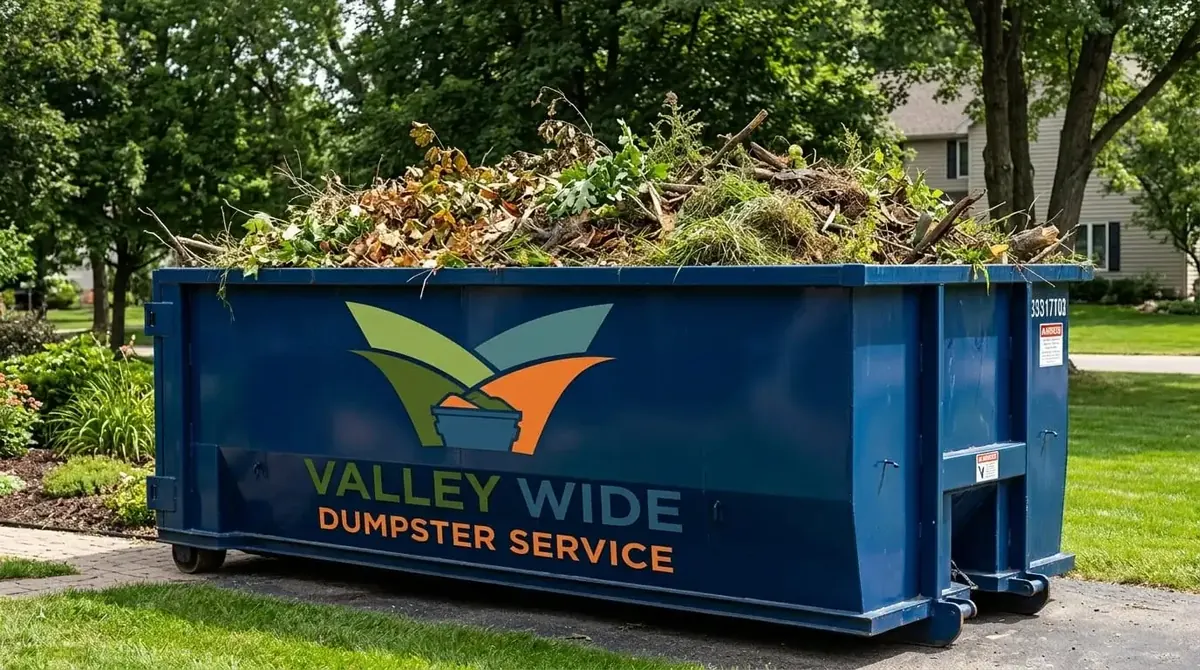
After a storm there are usually two piles. The green pile — palm fronds, broken limbs, a toppled shrub — is something most cities will take through their bulk or green programs, and clean green costs less at the gate: the Phoenix transfer stations charge $32 a ton at 27th Avenue and $37 at North Gateway for certified clean green, against $55 for a mixed load. The other pile — block from a wall, fence panels and posts, roof tile and underlayment, gutters, wet drywall and carpet from a leak — is construction debris, and no city bulk program on our run takes it. That is what the roll-off is for.
Where the green waste goes, city by city
Every city sets its own bulk and green rules. The short version, from each city's own pages and code:
- Phoenix: bulk by appointment, four times a year, up to 10 cubic yards; vegetation bagged and tied, branches under 12 inches across and 4 feet long; no loose grass or leaves, and no stumps or trunks over 4 feet. Residents can also take one load of up to a ton to a transfer station free each month.
- Tempe: bulk and green organics collection every other month, piles up to 10 cubic yards.
- Scottsdale: monthly brush and bulk, one pile no bigger than 10 by 6 by 4 feet, branches cut to 6 feet; landscapers and tree trimmers must take their own brush away.
- Glendale: monthly bulk by section, piles up to 6 feet high, limbs cut to 4 feet and under 12 inches across.
- Avondale: limbs up to 4 feet long, 6 inches across and 50 pounds — palm fronds are excepted from those limits.
- Gilbert: every five weeks, up to 5 by 5 by 10 feet of combined yard waste and bulk.
- Peoria: twice a year free, branches up to 3 feet long and 3 inches thick; paid special hauls in between.
- Goodyear: one day a month, up to 5 cubic yards, cut to 4 feet — and a landscaper being paid may not leave the debris for City pickup.
- Elsewhere: Mesa's bulk is paid, from $31 a load; Chandler gives four free a year; Queen Creek takes up to 6 cubic yards a month and Apache Junction one curbside pickup a month; Fountain Hills has one bulk day per zone; Surprise and Buckeye allow 20 cubic yards a year by schedule. Paradise Valley and Cave Creek have no town bulk service — collection there is private.
If the green pile is bigger than your city allows, or the next pickup is weeks away, it can go in the roll-off too. On a big cleanup, a box of green waste on its own and a smaller box for the rubble can cost less than one mixed box.
What goes in the roll-off
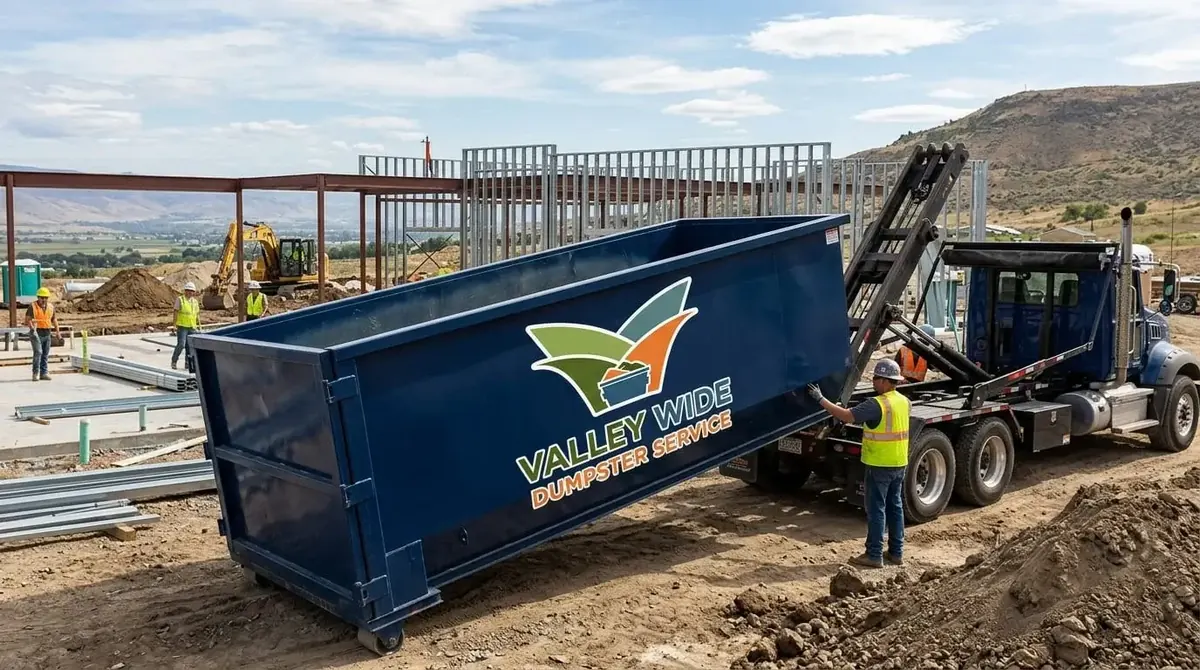
Everything the bulk crews will not touch. Phoenix bulk refuses bricks, concrete, rock, roofing shingles and tiles, and construction material over 25 pounds or 4 feet long; Glendale's refuses blocks, bricks, shingles, drywall and tile; Goodyear's refuses roofing, drywall and concrete; Mesa's refuses tile, concrete and doors. Gilbert's code says construction debris, rock and concrete must go to a landfill or "an alternative service, such as roll-off containers." So a cracked block wall, a fence line, a section of tile roof, gutters, patio furniture, and the wet drywall, carpet and insulation from a monsoon leak all go in the box — along with the fronds and limbs, if you want it done in one trip.
Sizing storm cleanup
Fronds, limbs and fence panels are bulky and light, so a 15 or 20 yard is the usual call. Block wall, roof tile and concrete footings are heavy: a 10 yard loaded level, or a 15, keeps them inside the weight allowance. Wet drywall and carpet weigh more than they look. If the job mixes a wall and a yard full of limbs, say so and we size for the weight. Cut trunks and big limbs into short lengths before they go in — they stack tighter, and at the Glendale landfill anything 4 feet long or 2 feet across is charged at the hard-to-handle rate. The sizing guide has the numbers.
Loading in the heat
Monsoon cleanups happen in the hottest part of the year, so plan the work around the heat. Load in the early morning or the evening, not mid-afternoon. Wear gloves, long sleeves and closed shoes — steel sides that have sat in the sun get hot, and broken block and tile have sharp edges. Drink water before you are thirsty and take breaks in the shade. Lift with your legs, keep heavy pieces low and spread across the floor, and never climb onto the load to stamp it down. If the job is more than you want to lift in this heat, our junk removal crew can do the loading.
Dust storms, tarps and the rules
Maricopa County's dust rule (Rule 310) requires hauled loads to be covered by a tarp with at least three inches of freeboard, with nothing loaded higher than the container sides. That matters more in monsoon season: a box heaped above the rails cannot be hauled, and loose fronds and insulation blow out of it in the next storm. Keep the load level and put light material under something heavy. In Cave Creek, the Town warns that some roads may become impassable in extreme weather and that many homes sit on private dirt roads — tell us about access when you book.
Contractors, insurance and how fast we get there
Photograph the damage before anything goes in the box; your insurer will want it. If a roofer or landscaper does the work, check who hauls the debris: Scottsdale and Goodyear make paid landscapers take their own, and Chandler and Avondale let contractors haul their own job waste. Our phone is answered 24 hours a day, 7 days a week. Same-day delivery is often available when you call before noon, and in a busy storm week we tell you honestly where you are in the queue. Keep the box off the street unless the city's permit is in hand — the permit guide has each city's rule.